Philips P2000 Wired Over-Ear Headphones: strengths and limitations
Reasons to consider it
- Simple battery-free wired connection
- 3.5mm plug and 6.3mm adapter
- Long cable for desk or instrument use
- Swiveling earcup for one-ear monitoring
Reasons to skip it
- No microphone or active noise cancellation
- Sound accuracy is not established by driver size
- Long attached cable can be awkward
- Model-level official documentation is limited
As an Amazon Associate I earn from qualifying purchases. This link may earn PickScoreLab a commission at no additional cost to you.
Short answer: Philips P2000 is most credible for low-cost wired listening and basic monitoring. It is an inexpensive analog utility headphone rather than a proven studio reference, with connector compatibility and comfort more important than the 40mm headline.
The Amazon configuration covered here is ASIN B085899TQ9. The ASIN identifies Philips model P2000; verify that the current package includes the snap-on 6.3mm adapter and the expected cable. Confirm the current seller, selectable configuration, included accessories, warranty provider, and return terms before ordering.
Philips P2000 Wired Over-Ear Headphones key specifications
| Specification | Published detail |
|---|---|
| Design | Wired over-ear monitoring-style headphones |
| Drivers | 40mm dynamic driver claim |
| Connection | 3.5mm plug with snap-on 6.3mm adapter |
| Cable | Approximately two-meter cable claim |
| Earcups | 90-degree swivel claim |
| Microphone and ANC | No boom microphone and no active noise cancellation |
Connection flexibility and monitoring use
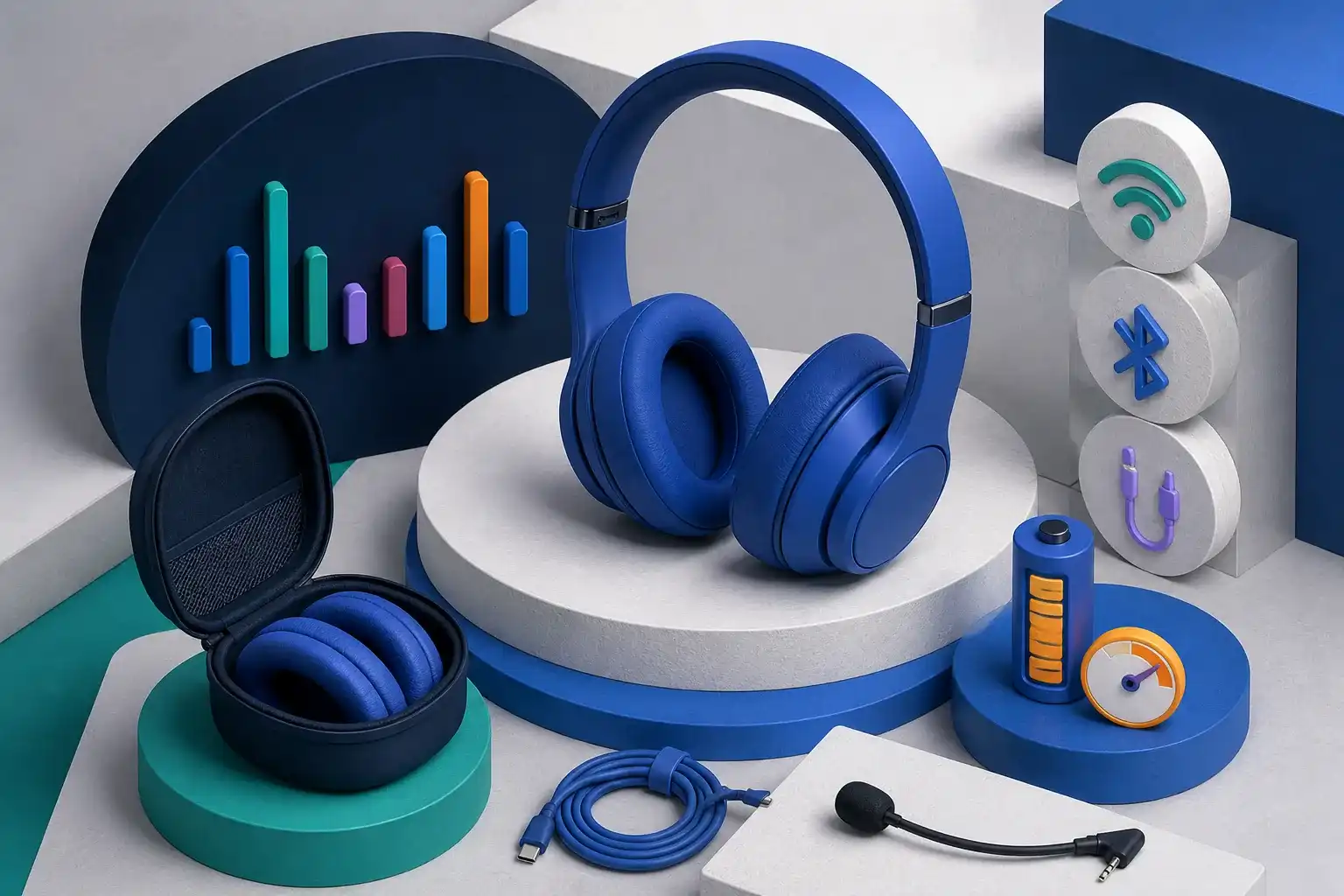
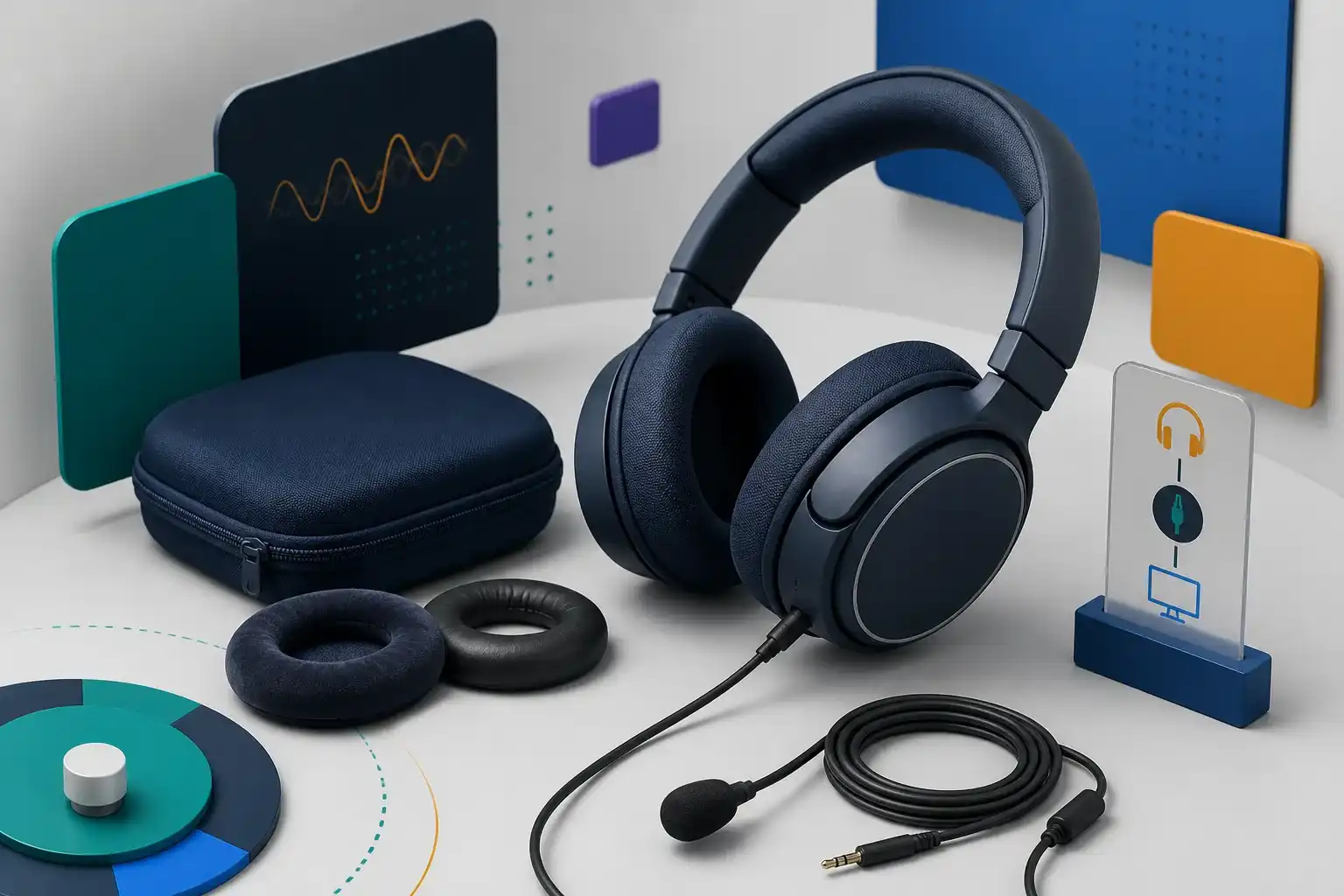
The P2000 uses a conventional 3.5mm analog connection and adds a 6.3mm adapter for mixers, keyboards, guitars, and audio interfaces. That avoids Bluetooth pairing, charging, codec, and latency questions.
A long cable can be useful at a desk or instrument but can catch on furniture and is less convenient for travel. Buyers should verify whether the cable is attached and whether the source can produce adequate clean volume.
Sound, isolation, comfort, and microphone limits
A 40mm driver specification does not establish tonal balance, detail, distortion, or suitability for mixing. The headphones may be useful for basic tracking and monitoring, but critical production work benefits from published measurements and a known reference.
Passive over-ear coverage can reduce some surrounding sound, but it is not active noise cancellation. Clamp, pad depth, heat, glasses, head shape, and the small amount of headband padding determine long-session comfort.
Support, ownership, and configuration checks
The absence of a boom microphone means podcast recording and calls require a separate mic. The swivel feature can help one-ear monitoring, while hinges, pads, cable strain relief, and adapter retention should be inspected during the return window.
Retail product pages can change sellers, bundles, or selectable capacities without changing the familiar product name. Save the order details and compare the delivered model, installed hardware, ports, accessories, operating-system activation, and warranty information with the live listing while the return period is open.
How this review assesses the listing
This is a source-led decision analysis, not a report of a purchased test sample. We use the exact model identity and ASIN B085899TQ9 as the boundary of the article because a familiar product name can cover several generations, regional versions, capacities, bundles, or seller-modified configurations. Claims from a related model should not be silently transferred to this listing.
The specification table separates published facts from interpretation. Fields such as Design, Drivers, Connection help define the configuration, but they do not by themselves prove real-world speed, comfort, runtime, durability, or compatibility. Where a seller claim cannot be matched to clear manufacturer documentation, the prudent response is to keep it conditional and verify the delivered item during the return window.
The primary references for this review include Philips P2000 listing documentation and Philips — audio support. These sources can still change after publication, and retailer pages can switch sellers or selectable variants without changing the page address. That is why the current model number, included accessories, warranty provider, and return terms should be captured at checkout rather than inferred from an old search snippet.
Compatibility, support, and ownership cost
Headphone specifications cannot fully predict comfort or sound preference. Clamp force, pad material, ear-cup depth, head shape, heat buildup, and listening level affect daily use, while microphone quality depends heavily on room noise and the connected application.
Connection modes should be evaluated separately. Bluetooth codec support, multipoint behavior, latency, microphone availability, and wired operation can change by device and mode, so a feature that works on a phone may not behave identically on a work computer or game console.
Battery and ANC claims are normally measured under controlled settings. Volume, codec, calls, noise control, temperature, and age can reduce real runtime, which is why charging speed and usable wired fallback may matter as much as the advertised maximum.
Total cost is broader than the displayed product price. Necessary adapters, cables, batteries, storage, memory, protective accessories, software, warranty coverage, and return shipping can change which option is actually economical. The safest comparison uses the full usable setup over the intended ownership period, not a single promotional number.
Support quality also affects value. Clear manuals, current drivers or firmware, replacement parts, and an identifiable warranty channel reduce uncertainty. Products with thin documentation may still work for a simple task, but the buyer accepts more responsibility for confirming compatibility and resolving problems.
A practical comparison method
Start by writing down the non-negotiable requirements, then compare alternatives against the same list. For this product, the first checks include: confirm the 6.3mm adapter and cable are included; confirm the headphones produce sufficient volume from the intended source; test clamp, pad depth, swivel joints, cable noise, and comfort promptly. A candidate that fails one required condition should not be rescued by an unrelated premium feature.
Next, compare the Philips P2000 Wired Over-Ear Headphones with one simpler option and one step-up option. The simpler choice reveals whether you are paying for capabilities you will not use; the step-up choice shows whether a modest additional cost removes a meaningful limitation. Keep seller support, included items, and configuration constant so that the comparison is not distorted.
Finally, use the live listing as the last verification step rather than the first source of truth. The best paper fit described here is low-cost wired listening and basic monitoring, while the clearest reason to choose something else is you need accurate studio reference or calls. That distinction is more useful than a universal score because different workloads can reasonably lead to different decisions.
Who should consider the Philips P2000 Wired Over-Ear Headphones?
This product is most plausible for:
- Home musicians needing both 3.5mm and 6.3mm analog connectivity.
- Podcast or recording setups that already use a separate microphone.
- Budget listeners who prefer a long wired cable and no battery.
It is not a universal recommendation. The better choice depends on the exact workload, connected devices, support expectations, and the live seller terms.
Buying checklist
Before ordering, verify:
- confirm the 6.3mm adapter and cable are included
- confirm the headphones produce sufficient volume from the intended source
- test clamp, pad depth, swivel joints, cable noise, and comfort promptly
- 3.5 mm source compatibility and whether the 6.3 mm adapter is included
- ear-cup dimensions, clamp, pad material, and long-session comfort
- cable length, cable attachment, swivel behavior, and microphone requirement
- source output level and intended listening or monitoring environment
- seller, warranty provider, return window, and exact model on delivery
Frequently asked questions
Is the Philips P2000 good for demanding work?
They can serve basic listening and monitoring, but the listing does not establish the neutral frequency response, low distortion, durability, or repeatability expected from a professional reference headphone.
Can the Philips P2000 be upgraded?
This is not a computer, so upgradeability mainly means replaceable pads, cable, and adapter. Confirm current part availability; do not assume the attached cable or cushions are user-replaceable.
What should be checked after the Philips P2000 arrives?
Verify the exact model identity, core specifications, visible condition, ports, included accessories, basic operation, operating-system activation, and warranty path before the return period expires.
Final verdict
Philips P2000 can be a rational choice for low-cost wired listening and basic monitoring when the delivered configuration matches the listing and the stated limitations fit the workload. Use a better-documented monitoring model when mix decisions, replaceable parts, or all-day professional comfort are central requirements.
Check the Philips P2000 Wired Over-Ear Headphones listing
Confirm the model and ASIN (B085899TQ9), current specifications, color, seller, and return terms before ordering. Amazon prices and availability can change.
Check the Philips P2000 on Amazon(paid link)As an Amazon Associate I earn from qualifying purchases. This link may earn PickScoreLab a commission at no additional cost to you.
Sources and further reading
Product specifications, firmware behavior, price, and availability can change. Verify the current manufacturer documentation and seller listing before purchasing.