Sony MDR-ZX110 Headphones: strengths and limitations
Reasons to consider it
- No charging, pairing, app, or firmware required
- Lightweight folding design
- Low cost reduces risk for shared or backup use
- Standard 3.5mm connection works with many devices
Reasons to skip it
- On-ear pressure and limited padding may tire some users
- Passive isolation is modest
- Fixed cable can become the failure point
- ZX110 variants with and without microphone can be confused
As an Amazon Associate I earn from qualifying purchases. This link may earn PickScoreLab a commission at no additional cost to you.
Short answer: The MDR-ZX110 succeeds by being simple: connect the 3.5mm plug and listen without charging, pairing, or software. It is a reasonable low-cost backup or shared headphone, but the on-ear fit, basic construction, modest isolation, and variant confusion limit its appeal for long work sessions.
The Amazon configuration covered here is ASIN B00NJ2M33I. This ASIN is the basic stereo headphone listing. Confirm whether the selected variant includes an inline microphone, because MDR-ZX110 and MDR-ZX110AP configurations are not interchangeable.
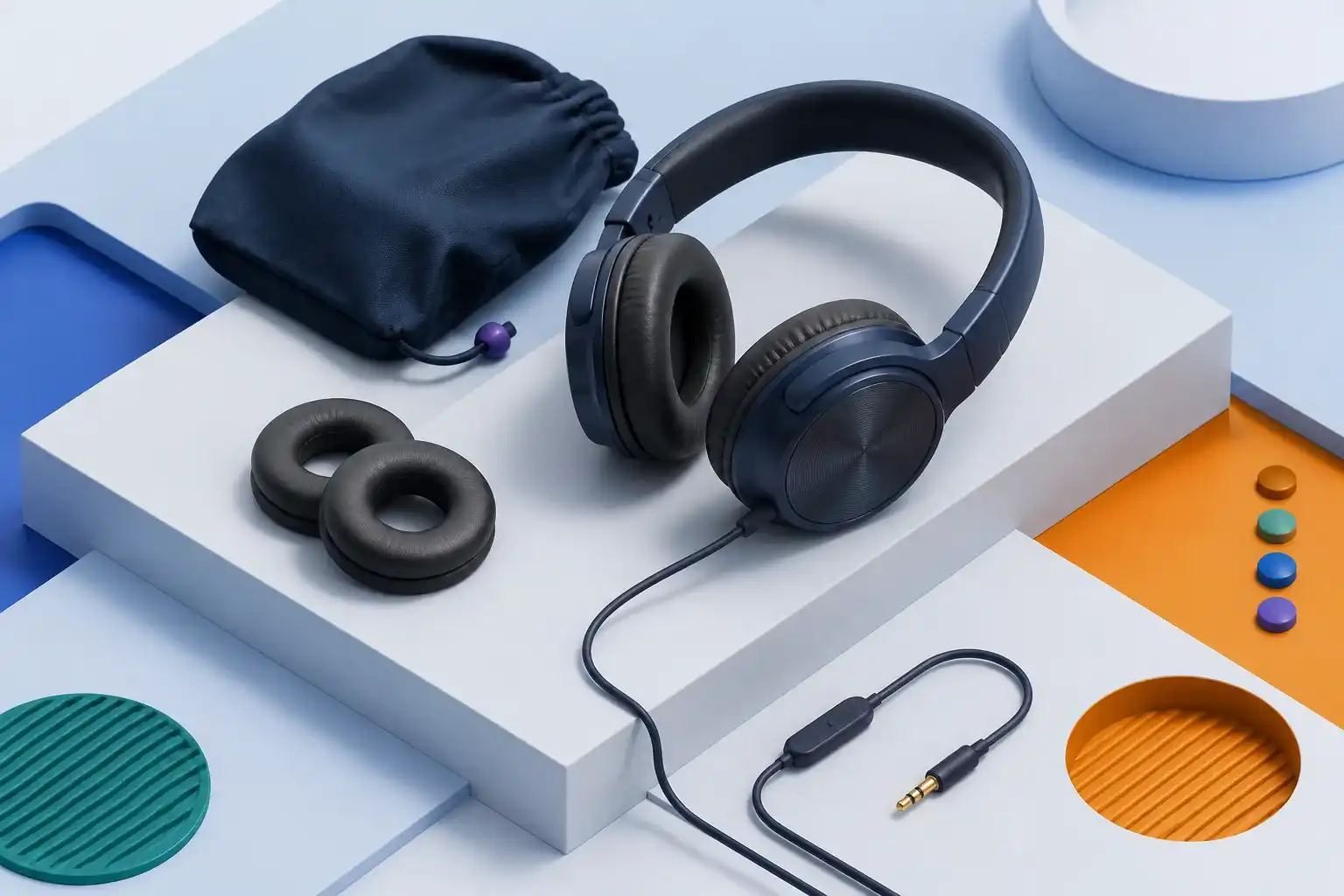
Sony MDR-ZX110 Headphones key specifications
| Specification | Published detail |
|---|---|
| Design | Closed, dynamic on-ear headphone |
| Connection | Fixed 3.5mm analog cable |
| Driver | 30mm dynamic driver listed by Sony |
| Portability | Swiveling folding ear cups |
| Power | No battery required |
| Microphone | Depends on exact ZX110 variant |
Wired simplicity is the main feature
A passive analog headphone avoids Bluetooth pairing, codec negotiation, charging, app accounts, and firmware. That makes the ZX110 useful for classrooms, desktops, digital pianos, airplane adapters, handheld devices, and emergency backup—provided the source still has a compatible 3.5mm output.
Many current phones and thin laptops require a USB-C or Lightning audio adapter. Adapter quality and headset wiring standards can affect microphones and controls. Add that cost before assuming a wired headphone is the simplest solution for every device.
Sound expectations
Sony lists a 30mm dynamic driver, but driver diameter does not determine sound quality. Cup volume, damping, seal, tuning, source output, and fit all contribute. At this price, the sensible expectation is clear everyday listening rather than neutral studio monitoring or deep controlled bass.
A wired connection avoids Bluetooth compression and wireless latency, but the headphone’s acoustics remain the larger factor. Musicians monitoring timing may appreciate the direct connection, while mixing and mastering work requires more accurate, measured headphones.
On-ear comfort and isolation
The pads rest on the ears instead of surrounding them. This keeps the headphone compact but can create pressure during long sessions, particularly with glasses. The light weight helps, yet weight does not reveal clamp or pad comfort.
Passive isolation is likely lower than a well-sealed over-ear or in-ear design. That can be safer when awareness matters but less effective in transit or a shared office. Raising volume to overpower noise increases listening risk and does not improve isolation.
Durability and variant checks
The folding joints and fixed cable improve portability while adding mechanical stress points. Store the headphones without sharply bending the cable near the plug and avoid wrapping it tightly around the ear cups. Low replacement cost does not remove the inconvenience of early failure.
Sony sells closely named variants. Verify the model code, plug type, microphone, button behavior, cable length, color, and seller. A product photo or review written for the AP headset variant may not describe the microphone-free version.
How this review assesses the listing
This is a source-led decision analysis, not a report of a purchased test sample. We use the exact model identity and ASIN B00NJ2M33I as the boundary of the article because a familiar product name can cover several generations, regional versions, capacities, bundles, or seller-modified configurations. Claims from a related model should not be silently transferred to this listing.
The specification table separates published facts from interpretation. Fields such as Design, Connection, Driver help define the configuration, but they do not by themselves prove real-world speed, comfort, runtime, durability, or compatibility. Where a seller claim cannot be matched to clear manufacturer documentation, the prudent response is to keep it conditional and verify the delivered item during the return window.
The primary references for this review include Sony — MDR-ZX110 product page and Sony Support — MDR-ZX110 manuals. These sources can still change after publication, and retailer pages can switch sellers or selectable variants without changing the page address. That is why the current model number, included accessories, warranty provider, and return terms should be captured at checkout rather than inferred from an old search snippet.
Compatibility, support, and ownership cost
Headphone specifications cannot fully predict comfort or sound preference. Clamp force, pad material, ear-cup depth, head shape, heat buildup, and listening level affect daily use, while microphone quality depends heavily on room noise and the connected application.
Connection modes should be evaluated separately. Bluetooth codec support, multipoint behavior, latency, microphone availability, and wired operation can change by device and mode, so a feature that works on a phone may not behave identically on a work computer or game console.
Battery and ANC claims are normally measured under controlled settings. Volume, codec, calls, noise control, temperature, and age can reduce real runtime, which is why charging speed and usable wired fallback may matter as much as the advertised maximum.
Total cost is broader than the displayed product price. Necessary adapters, cables, batteries, storage, memory, protective accessories, software, warranty coverage, and return shipping can change which option is actually economical. The safest comparison uses the full usable setup over the intended ownership period, not a single promotional number.
Support quality also affects value. Clear manuals, current drivers or firmware, replacement parts, and an identifiable warranty channel reduce uncertainty. Products with thin documentation may still work for a simple task, but the buyer accepts more responsibility for confirming compatibility and resolving problems.
A practical comparison method
Start by writing down the non-negotiable requirements, then compare alternatives against the same list. For this product, the first checks include: Exact MDR-ZX110 variant and whether a microphone is included; 3.5mm port or the correct audio adapter for the source; Comfort, clamp, glasses interaction, and pad coverage. A candidate that fails one required condition should not be rescued by an unrelated premium feature.
Next, compare the Sony MDR-ZX110 Headphones with one simpler option and one step-up option. The simpler choice reveals whether you are paying for capabilities you will not use; the step-up choice shows whether a modest additional cost removes a meaningful limitation. Keep seller support, included items, and configuration constant so that the comparison is not distorted.
Finally, use the live listing as the last verification step rather than the first source of truth. The best paper fit described here is simple, inexpensive wired listening, while the clearest reason to choose something else is you need isolation, a boom mic, or premium comfort. That distinction is more useful than a universal score because different workloads can reasonably lead to different decisions.
Who should consider the Sony MDR-ZX110 Headphones?
This product is most plausible for:
- Buyers who want a low-cost wired backup
- Students using shared computers or learning devices
- Musicians needing simple low-latency practice audio
- Users who do not want batteries or Bluetooth
It is not a universal recommendation. The better choice depends on the exact workload, connected devices, support expectations, and the live seller terms.
Buying checklist
Before ordering, verify:
- Exact MDR-ZX110 variant and whether a microphone is included
- 3.5mm port or the correct audio adapter for the source
- Comfort, clamp, glasses interaction, and pad coverage
- Cable length and plug clearance for the intended device
- Seller, return period, and regional Sony warranty
Frequently asked questions
Does the Sony MDR-ZX110 have a microphone?
The base MDR-ZX110 and headset variants differ. Confirm the exact model code and Amazon variation instead of assuming every ZX110 includes a mic.
Does it need charging?
No. It is a passive wired headphone powered by the connected device’s analog audio output.
Is it suitable for gaming?
It can provide low-latency game audio, but microphone needs, positional accuracy, comfort, and isolation should be evaluated separately.
Final verdict
The MDR-ZX110 remains relevant because it removes wireless complexity at a very low cost. It is best viewed as a functional wired tool, not a premium all-day headset. Confirm the microphone variant and connection, then judge it on comfort and the convenience of a replaceable backup.
Check the Sony MDR-ZX110 Headphones listing
Confirm the model and ASIN (B00NJ2M33I), current specifications, color, seller, and return terms before ordering. Amazon prices and availability can change.
Check the Sony MDR-ZX110 on Amazon(paid link)As an Amazon Associate I earn from qualifying purchases. This link may earn PickScoreLab a commission at no additional cost to you.
Sources and further reading
- Sony — MDR-ZX110 product page
- Sony Support — MDR-ZX110 manuals
- Amazon listing — reviewed configuration
Product specifications, firmware behavior, price, and availability can change. Verify the current manufacturer documentation and seller listing before purchasing.